Temple · Sasaguri
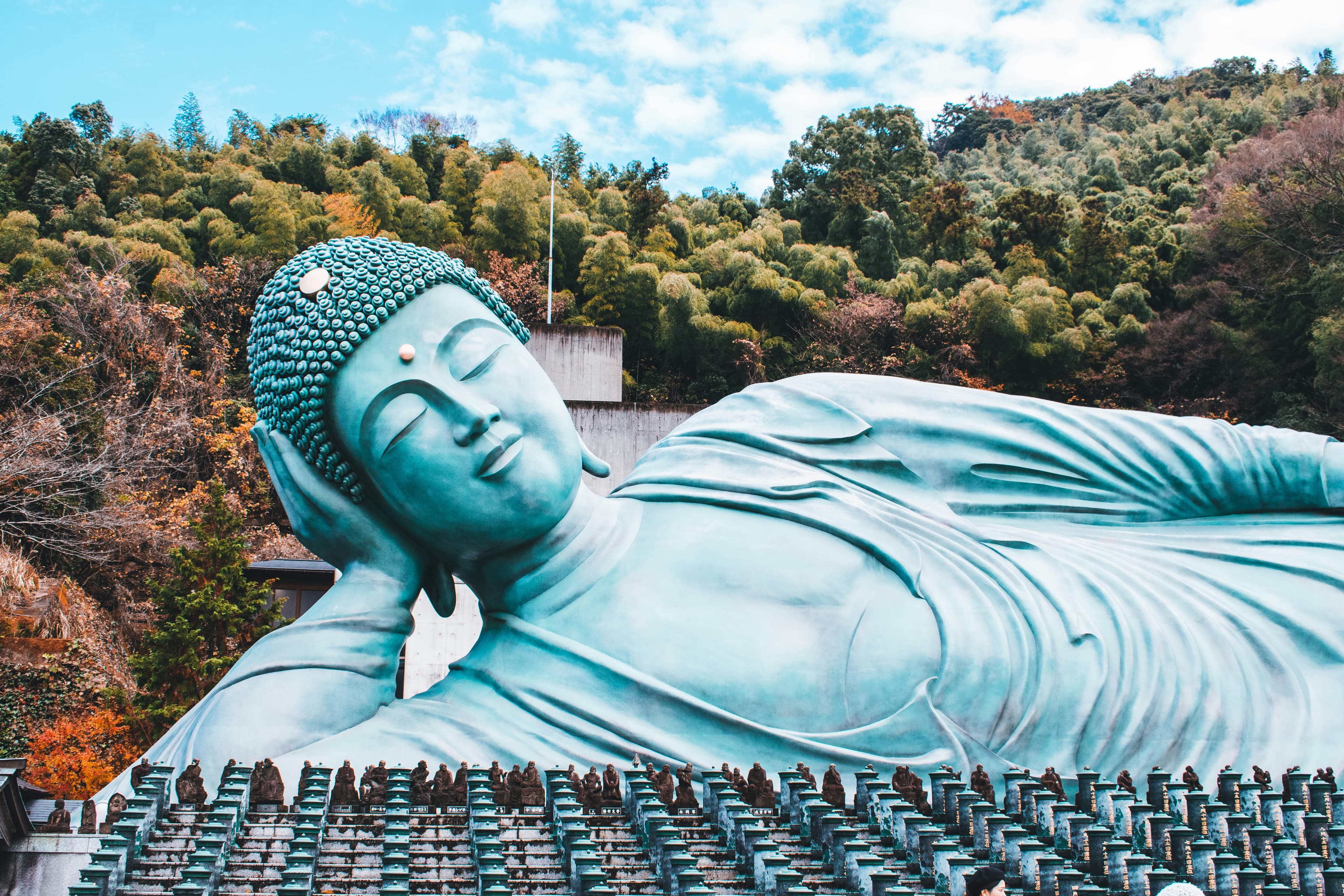
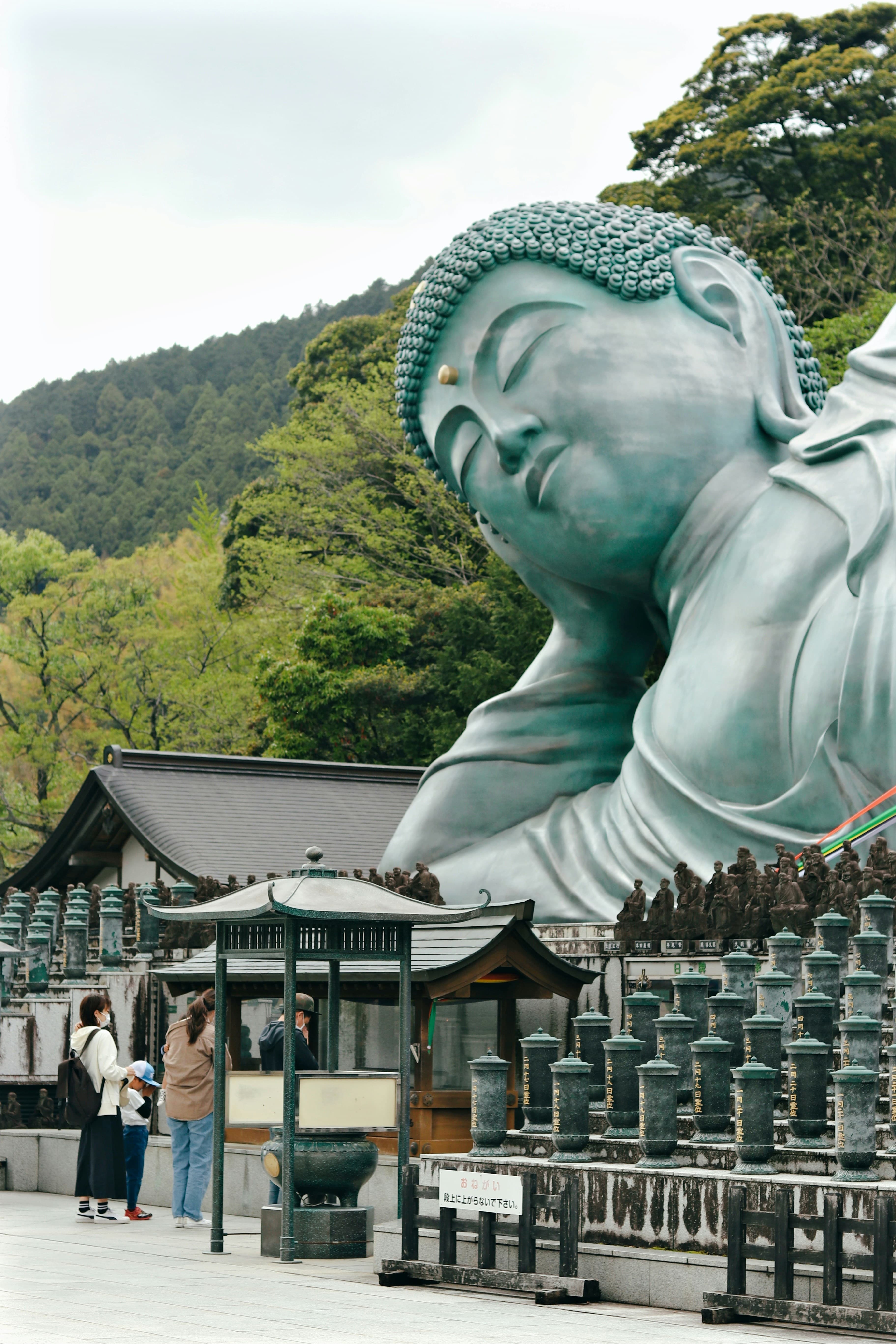
A statue of Buddha entering Nirvana at Nanzo-in Temple, one of the world's largest bronze statues at 41 meters long, 11 meters tall, and weighing 300 tons, and a symbol of Sasaguri Town.
Explore this site · 20 stops
You have visited 0 of 20 stops






History
The Shakyamuni Nirvana statue, which is the symbol of Nanzo-in Temple, is one of the world's largest bronze nirvana Buddhas, measuring 41 meters in length, 11 meters in height, and weighing approximately 300 tons.
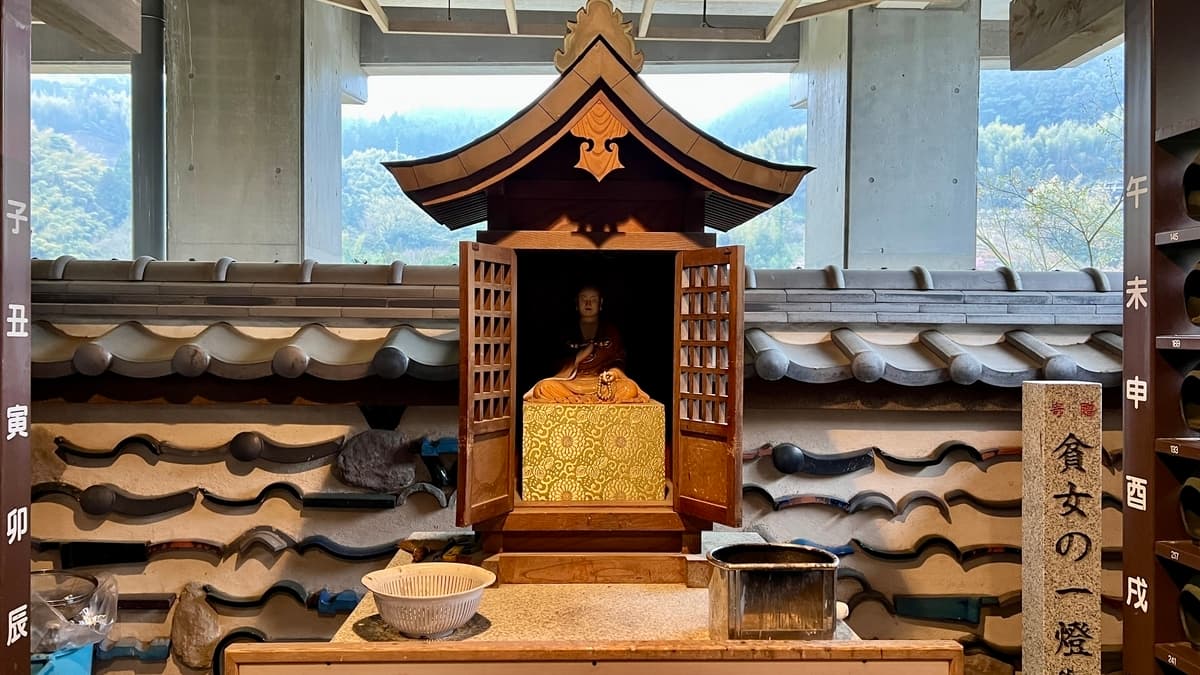
For many years, Nanzo-in Temple has been sending medicines, milk, and school supplies to children in Southeast Asian countries such as Myanmar and Nepal. In return, in 1988, the Myanmar Buddhist Conference presented Buddhist relics of three honored figures—Shakyamuni Buddha, Ananda, and Moggallana—as a gift.
To enshrine these precious Buddhist relics, construction of the nirvana statue began in 1992 and was completed in May 1995 after approximately three years of work. The total construction cost was 1.5 billion yen, and the statue was created by assembling approximately 320 bronze panels manufactured in Toyama Prefecture at the temple grounds.
The dedication ceremony celebrating the completion featured a "Thousand Monk Offering," attended by approximately 1,300 Buddhist monks from throughout Japan and various parts of Southeast Asia.
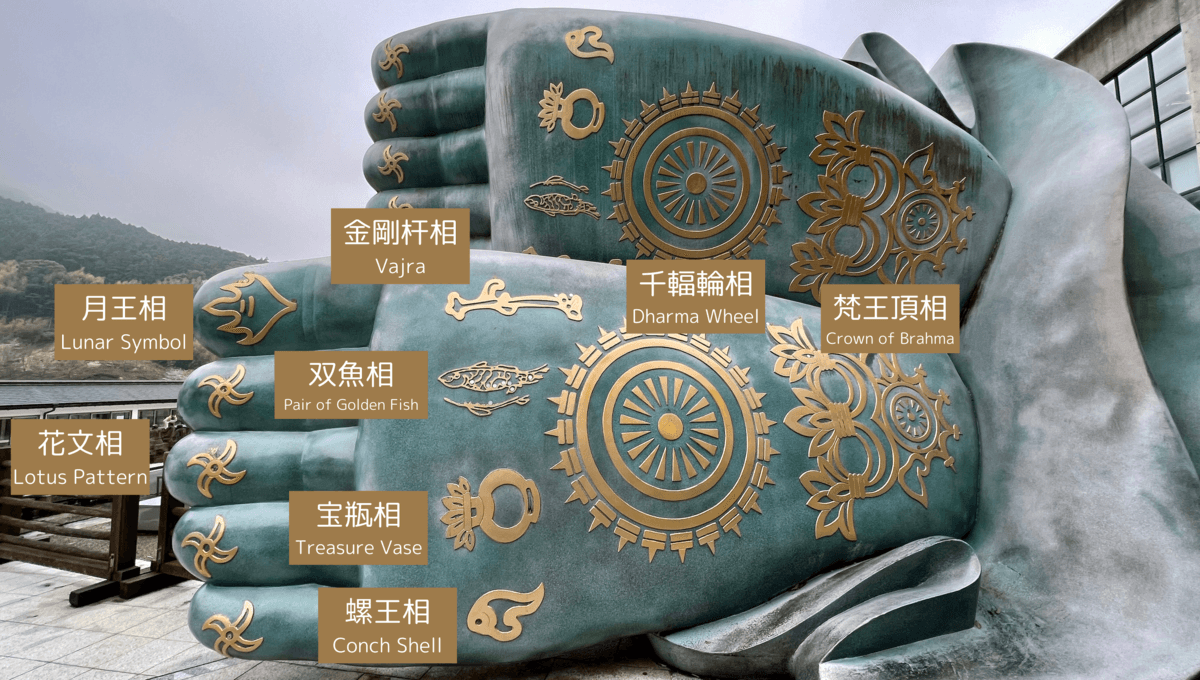
The statue's head is carved with 686 spiral curls, while the soles of the feet bear the Buddha footprint pattern symbolizing Shakyamuni's teachings and compassion, with profound meaning embedded in every detail.
Today, the statue welcomes over one million pilgrims annually and has become a spiritual refuge for many people as a symbol of Shinokura.
Every year at the end of the year, a cleaning ceremony called "Ominugui" is performed, washing away the year's dust before welcoming the new year—a cherished seasonal tradition.
Find Us Online
Practical Information
3 minutes walk from JR Fukuhoku Yutaka Line (Sasaguri Line) Kido Nanzoinmae Station
(24 minute by rapid train from Hakata Station)
About 30 minutes from Central are of FUKUOKA city via city expressway-highway 201
15 minutes from Fukuoka Exit via Route 201
Nanzoin has three free parking lots
jpexplained.com