Select language · 言語を選択
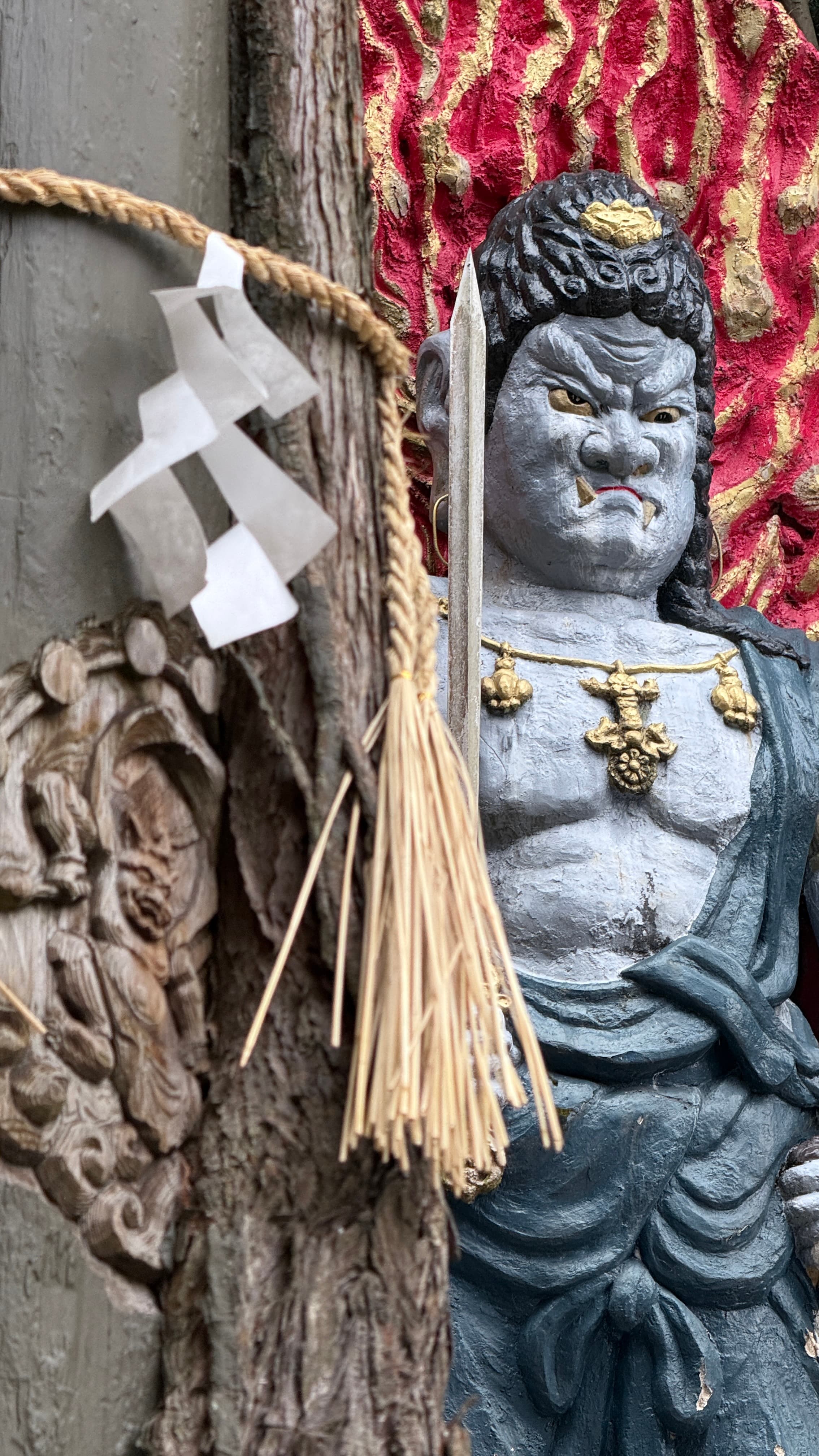
Standing 11 meters tall at Nanzoin Temple, this statue depicts a fierce Buddha that protects people from calamities. Affectionately called "O-Fudo-san," the angry expression and flames on its back symbolize the burning away of human foolishness and greed, while its heart is infinitely compassionate.
Fudō Myōō is one of the most beloved protective deities in Japanese Buddhism, venerated throughout the nation as a Buddha who shields people from misfortune and disaster. Nanzo-in Temple houses an 11-meter-tall statue of Fudō Myōō, though the temple is now famous for its Shakyamuni Nirvana statue. Before that nirvana image was constructed, however, this Acalanatha statue was the central focus of the temple.
Though his fierce expression and body engulfed in blazing flames appear terrifying, Fudō Myōō's heart is remarkably gentle, and he is affectionately called **"O-Fudo-san"** by the people. The flames at his back represent the burning away of earthly desires and foolish thoughts, his sword in the right hand cuts through greed, anger, and delusion, and the rope in his left hand binds evil and protects people. It is believed that sincere prayer to him will fulfill any wish.
Deities & Spirits
Fudō Myōō is considered a manifestation (gonka) of Dainichi Nyorai, the central Buddha of esoteric Buddhism. In other words, Fudō Myōō represents the fierce and powerful protective form of Dainichi Nyorai, the supreme Buddha in Shingon esoteric Buddhism.
Fudō Myōō is regarded as a Buddha who saves people from various calamities and misfortunes, and his appearance contains the following symbolic meanings:
The flames on his back: Burn away worldly desires and delusions
The sword in his right hand: Sever and correct "greed, anger, and foolish thoughts"
The rope in his left hand: Bind and remove evil things
More at this location


jpexplained.com