Select language · 言語を選択
The Seven Gods of Fortune who arrive on the treasure ship are deities that bring different types of luck—wealth, longevity, wisdom, protection from misfortune, and more. Their origins, a blend of Shinto, Hinduism, Taoism, and Buddhism, exemplify Japan's unique approach to faith.
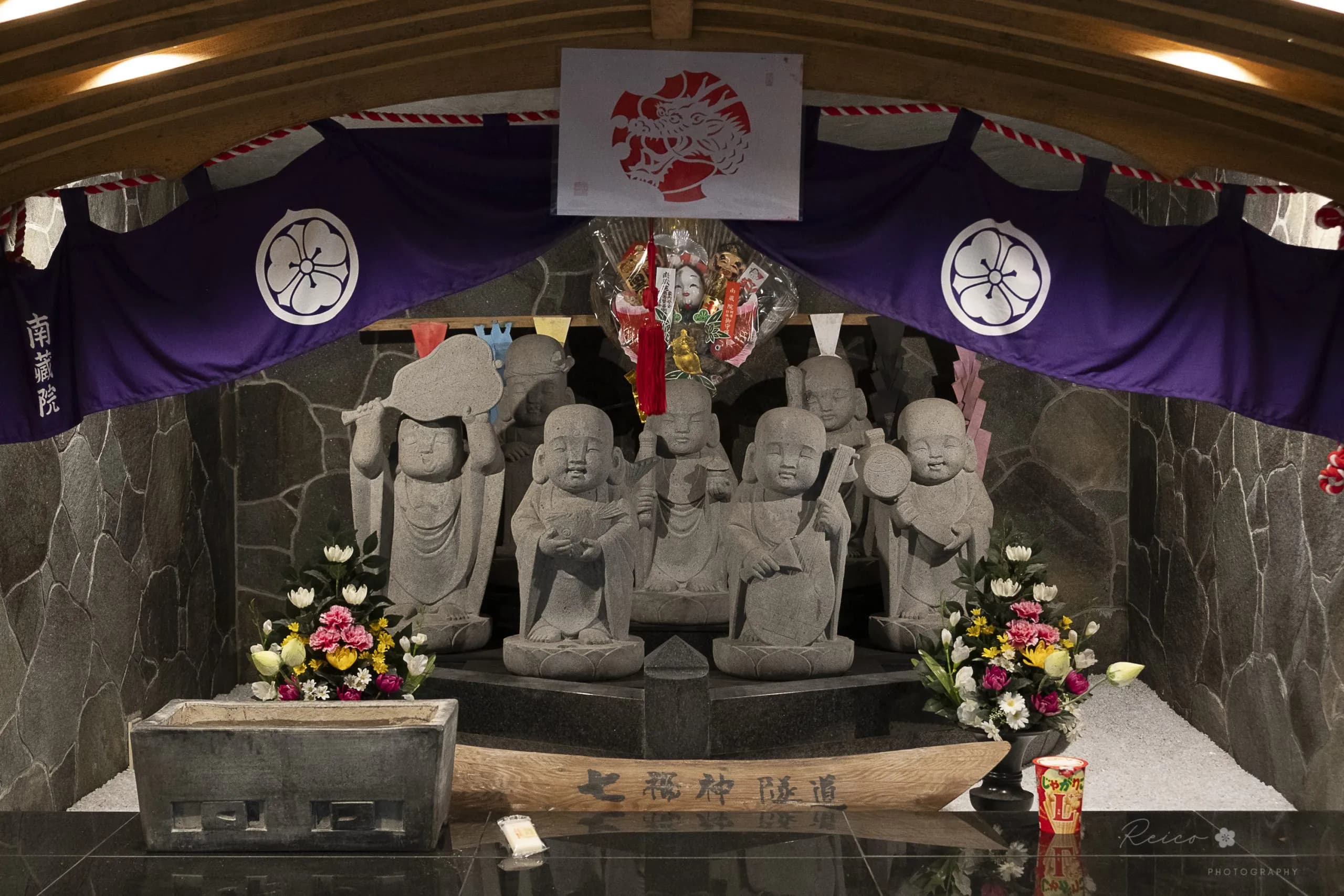
The Seven Gods of Fortune came to be regarded as a unified group during the Muromachi period (1336–1573). Their origin is said to derive from a Buddhist scripture passage stating "Seven Calamities Perish, Seven Fortunes Are Born"—meaning the seven disasters disappear and seven blessings emerge. During the Edo period, they became a popular subject among common people, and a tradition arose of them visiting households on New Year's Eve, riding in a treasure ship. What makes this group fascinating is the remarkable diversity of its members. Only Ebisu originates from Japan's native Shinto tradition; Daikoku-ten, Bishamonten, and Benzaiten are Hindu deities that came to Japan via China, while Fukurokuju, Jurojin, and Hotei have their roots in Chinese Daoism. At Nanzo-in Temple, all seven deities are enshrined as stone statues in a small tunnel-shaped hall called the "Seven Gods of Fortune Tunnel," each holding symbolic objects representing the blessings they bestow. Flowers are offered before them, and above their heads hangs a decorative rake—an auspicious symbol believed to "gather in" good fortune.
Deities & Spirits
① Ebisu
An ancient Japanese deity of the sea and commerce. Characterized by a cheerful smile, holding a fishing rod and a sea bream.
② Daikoku-ten
A deity who brings food and abundance. Standing upon rice bales and holding a magical mallet.
③ Bishamonten
A warrior god who guards the northern direction, clad in armor. Holding a spear and a treasure pagoda in his hands.
④ Benzaiten
The only female deity among the Seven Lucky Gods. She presides over music, eloquence, and wisdom, and is known for playing the biwa lute.
⑤ Fukurokuju
A Daoist immortal who grants longevity. Characterized by an elongated head.
⑥ Jurojin
A deity of longevity who forms a pair with Fukurokuju. Carrying a staff and accompanied by a deer.
⑦ Hotei
A deity who always wears a smile, carrying a large sack. Said to bring wealth and fortune, and is believed to have been based on an actual Zen Buddhist monk.
More at this location


jpexplained.com