Kyoto is the place to see traditional geisha culture survive in something like its original form. Nine working okiya (geisha houses) still operate in the Gion district, where maiko and geisha live while they train. In the afternoon they head out to work — either at a ryotei, a high-end traditional restaurant, or an ochaya, a teahouse built specifically for geisha entertainment. Ochaya have no kitchens of their own; food is delivered from nearby restaurants, which is why one of the few genuinely old-fashioned sights left on Gion's streets is the young men in kitchen caps cycling through the lanes with trays of food balanced for the ochaya's private rooms.
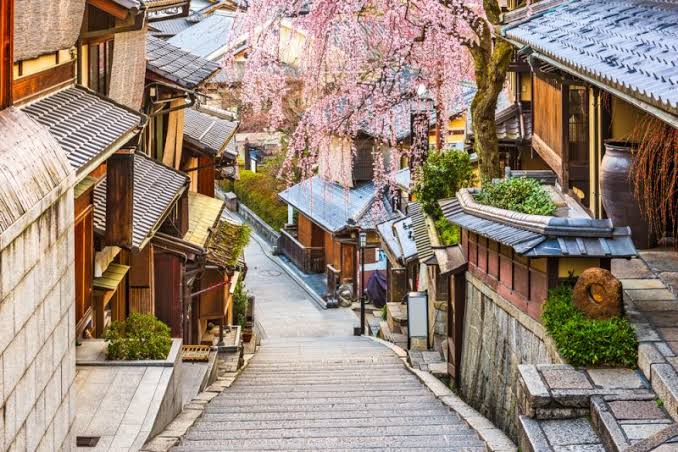
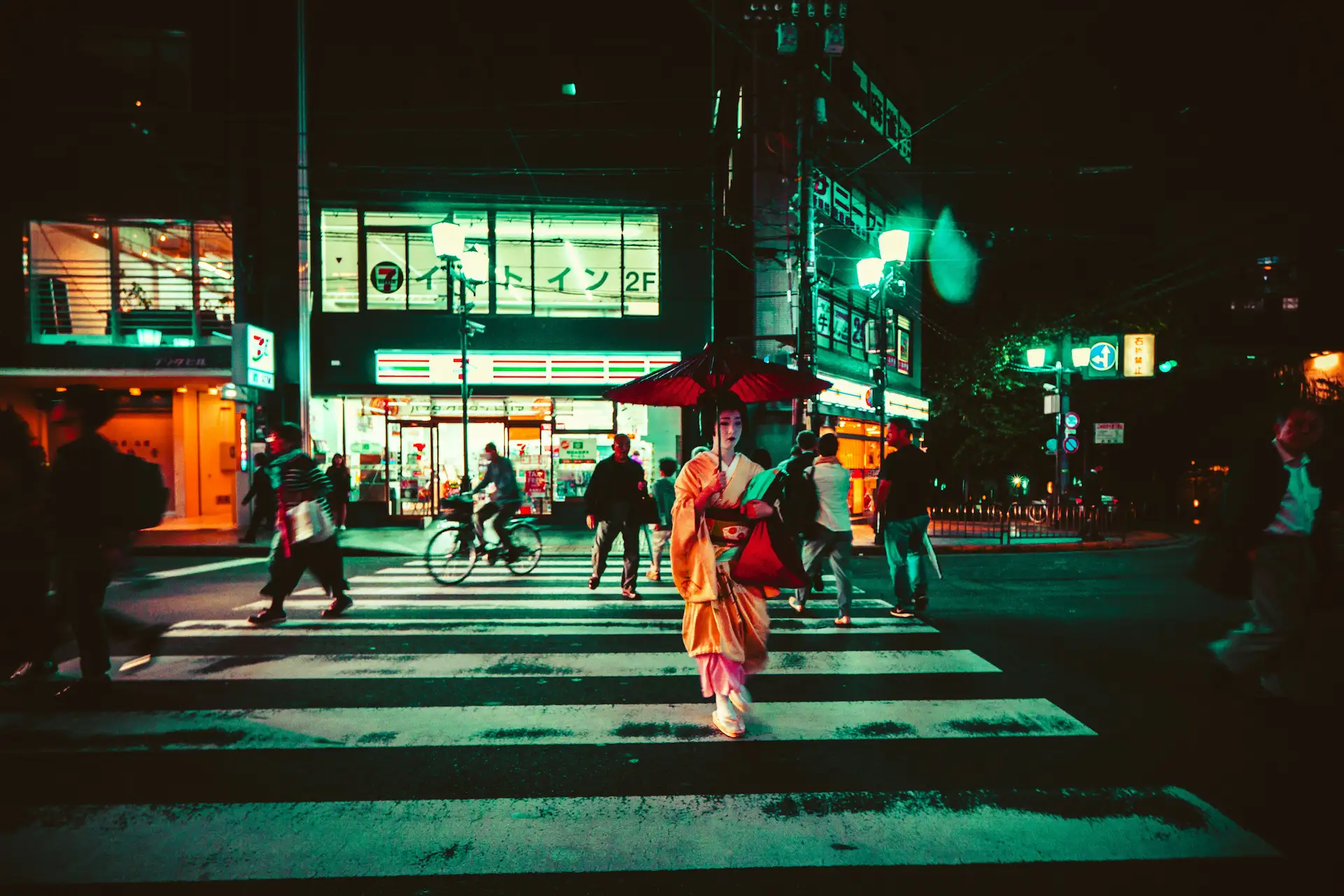
Actually seeing a maiko or geisha walking to an appointment is rare these days. What you're far more likely to see is a small crowd of tourists camped outside an ochaya entrance, phones ready.
The Ichiriki Ochaya: Gion's Most Famous Teahouse
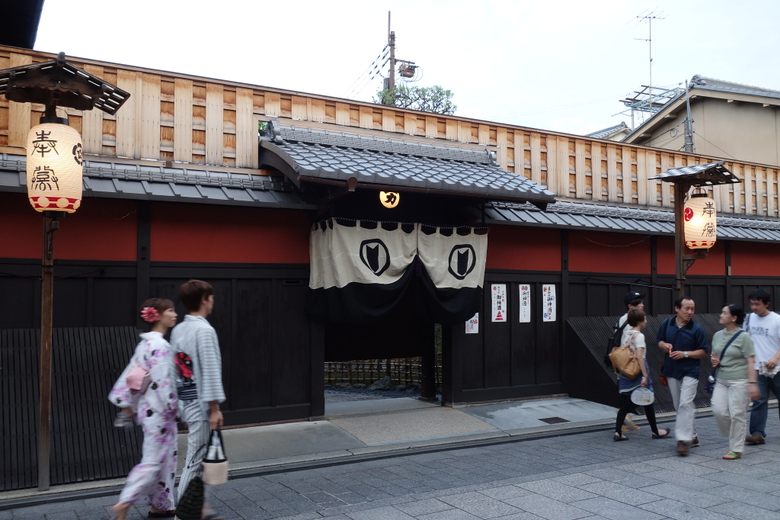
The best-known ochaya in Gion is Ichiriki, over 300 years old and instantly recognizable by its heavy black-and-red exterior walls and bamboo detailing, built to evoke castle fortifications. It sits at the southern entrance to the district, at the end of Shijo-dori.
Ichiriki's fame is historical as much as architectural. Early in the 18th century, Oishi Kuranosuke — leader of the Forty-Seven Ronin, the most famous story in the samurai canon — spent his nights here, deliberately playing the drunken wastrel to throw off the spies watching for a revenge plot against the men responsible for his lord's death. A century and a half later, the same teahouse hosted the kind of quiet, high-level conversation that fed into the movement to end the Tokugawa shogunate.
A night at Ichiriki today costs around $6,000 a head, and money alone won't get you in — admission requires a personal introduction from someone the owners already know. Tourists have no realistic path inside, so the closest most visitors get is watching a geisha come or go through Ichiriki's courtyard, or grabbing a coffee at the Starbucks next door with a copy of Memoirs of a Geisha — much of which is set here.
Maiko vs. Geisha: How to Tell Them Apart
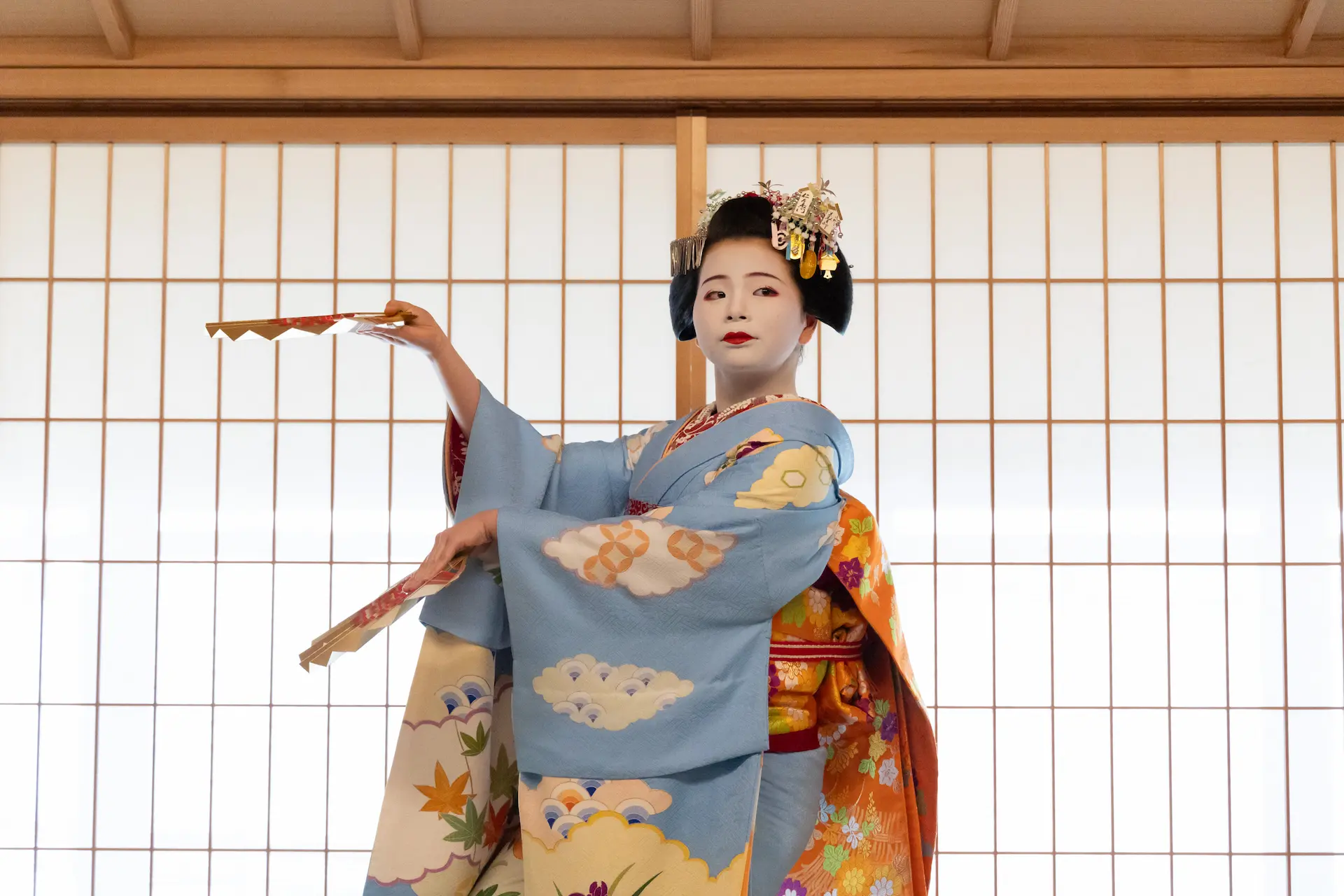
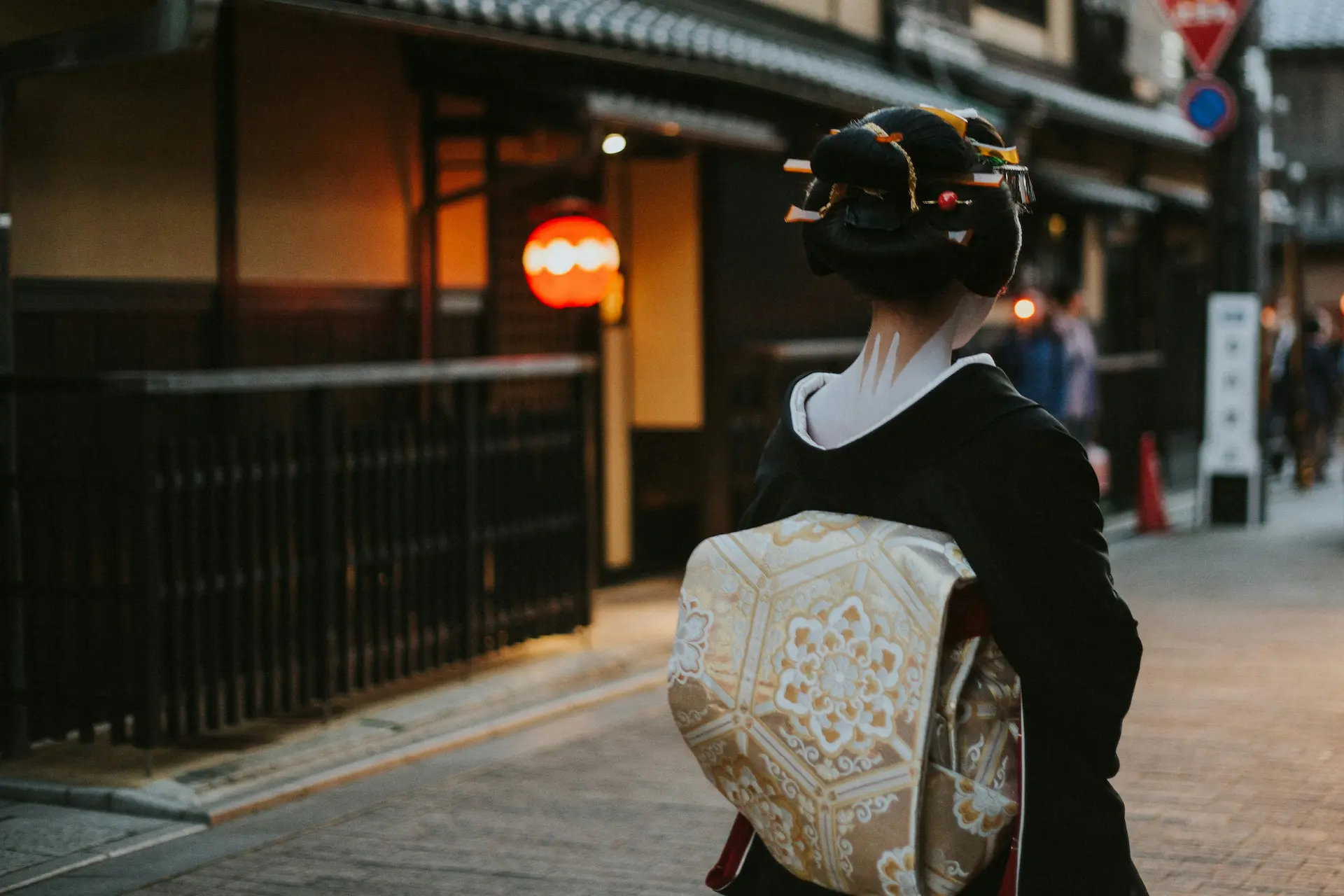
If you do spot one of Gion's residents in person, there's a good chance she's a maiko rather than a geisha — Kyoto's apprentices are far more numerous and, ironically, easier to recognize than the fully trained geisha they're working toward becoming. A few details make the distinction reliable:
Obi: Maiko wear a long, trailing darari obi that hangs almost to the ground, tied in an elaborate knot at the back. Geisha wear a shorter, more understated obi.
Hair: Maiko style their own hair into traditional shapes, often decorated with seasonal kanzashi ornaments. Geisha wear a wig instead, styled far more simply.
Kimono: Maiko wear a colorful, long-sleeved furisode kimono. Geisha wear plainer, more subdued kimono in muted tones, reflecting their senior status.
Collar: Maiko wear a red collar, heavily embroidered in white; geisha wear a plain white collar. This is the detail the transition ceremony itself is named for.
Age and experience: Maiko are apprentices, typically in their late teens. Geisha have completed their training — usually around five years — and are generally in their twenties or older.
Within the profession itself, geisha also split into two specializations: those who focus on music, and those who focus on dance. A maiko's transition into full geisha status is marked by erikae ("turning of the collar"), a formal ceremony in which her kimono, makeup, and hairstyle all change at once, capped by her first dance performed as a geisha.