Ask anyone who's spent time in Japan what surprised them most, and safety usually comes up early. It's not just a vibe — it shows up clearly in the data, though the exact numbers people quote online are often garbled. Japan's robbery rate, for instance, sits at roughly 1–2 incidents per 100,000 people, compared to somewhere around 80–100 per 100,000 in the United States — a gap of nearly two orders of magnitude for that specific crime. Property theft overall shows a real but less extreme difference: Japan runs somewhere in the low hundreds per 100,000 people, against a US burglary rate over 700. Whichever measure you use, the direction is the same, and it's not close.
What It Actually Feels Like
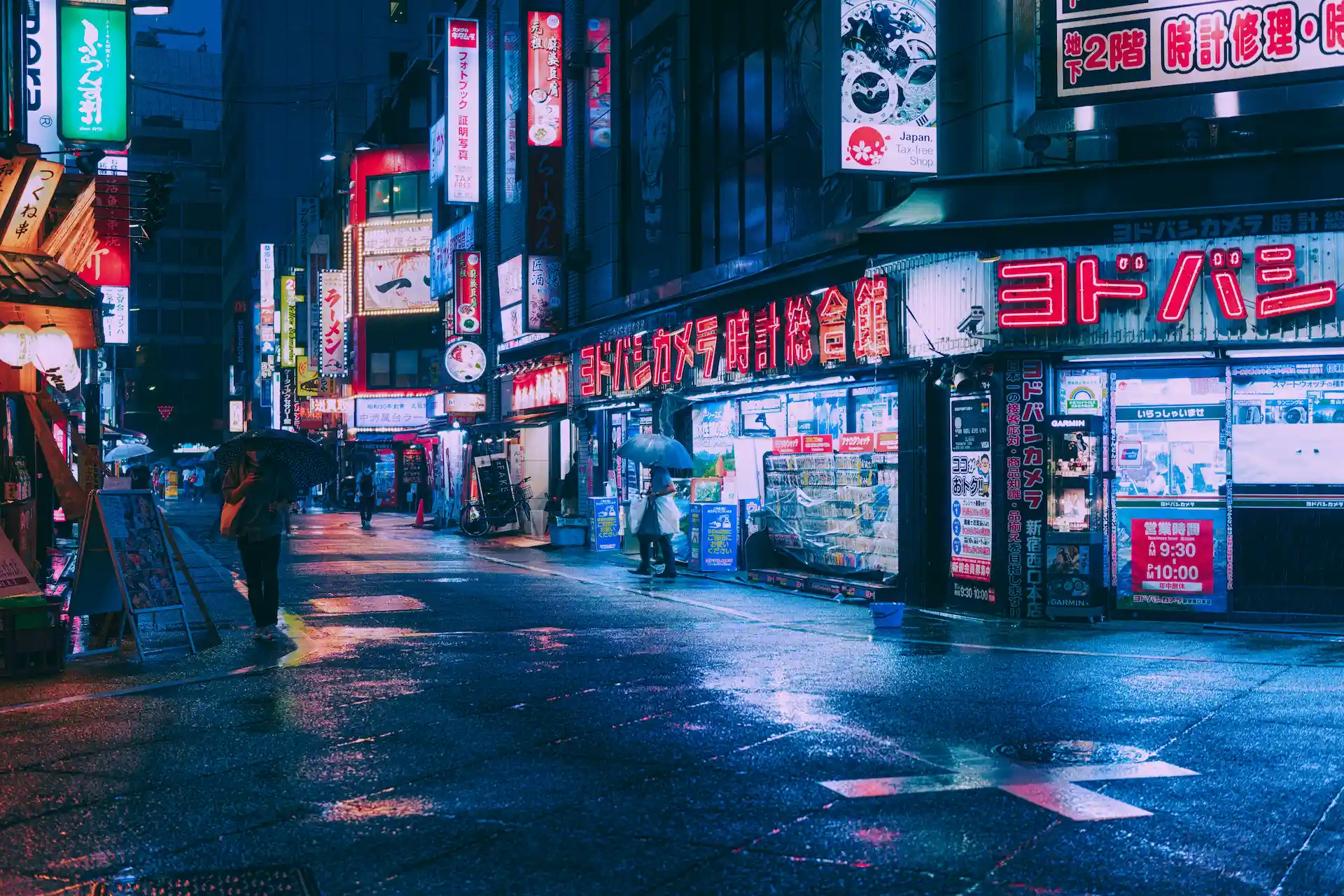
Numbers aside, what strikes most foreign residents is how safety translates into daily behavior. Leaving a phone or a jacket on a café table to hold your seat while you order isn't a small risk here the way it can feel elsewhere — it's routine. Bicycles get left unlocked outside convenience stores. Vending machines packed with cash sit undisturbed on empty streets at 2 a.m. None of this is a guarantee, and petty theft does happen, but the baseline level of trust in public space is genuinely different from what most Western visitors are used to.
One of the clearer illustrations of this is Japan's lost-and-found culture. Tokyo police alone take in several billion yen in lost cash every year — and consistently return somewhere around 70–75% of it to its owner. Wallets, phones, and IDs handed in to police follow a similar pattern, with return rates frequently above two-thirds. That's not an isolated anecdote; it's a well-documented, recurring statistic, and it says something real about how people here treat other people's property when no one's watching.
Why Is Crime So Low?
There's no single answer, but a few factors come up consistently.
Strict gun control is probably the most obvious. Legal firearm ownership in Japan is tightly restricted and heavily regulated, and gun crime is correspondingly almost nonexistent — a stark contrast with countries where firearms are far more accessible.
Enforcement and sentencing play a role too. Japan's conviction rate for prosecuted cases is extremely high, and penalties, particularly for drug offenses, tend to be severe by international standards.
A comparatively small drug trade also matters. Drug-related crime drives a meaningful share of property and violent crime in many countries; in Japan, both drug use and drug-related offending are far less prevalent, which removes a whole category of associated crime.
Social and cultural factors are the hardest to measure but are frequently cited by sociologists studying Japan. Japan is often described as a more group-oriented, consensus-driven society than many Western countries, and some researchers connect this to lower crime rates — the idea being that an act seen as damaging to one's family, workplace, or community carries a heavier social cost here than it might elsewhere. This is a real and widely discussed line of analysis, though it's worth treating as one contributing factor among several rather than a full explanation on its own — Japan's low crime rate is almost certainly the product of all of the above working together, not any single cause.
The Koban System
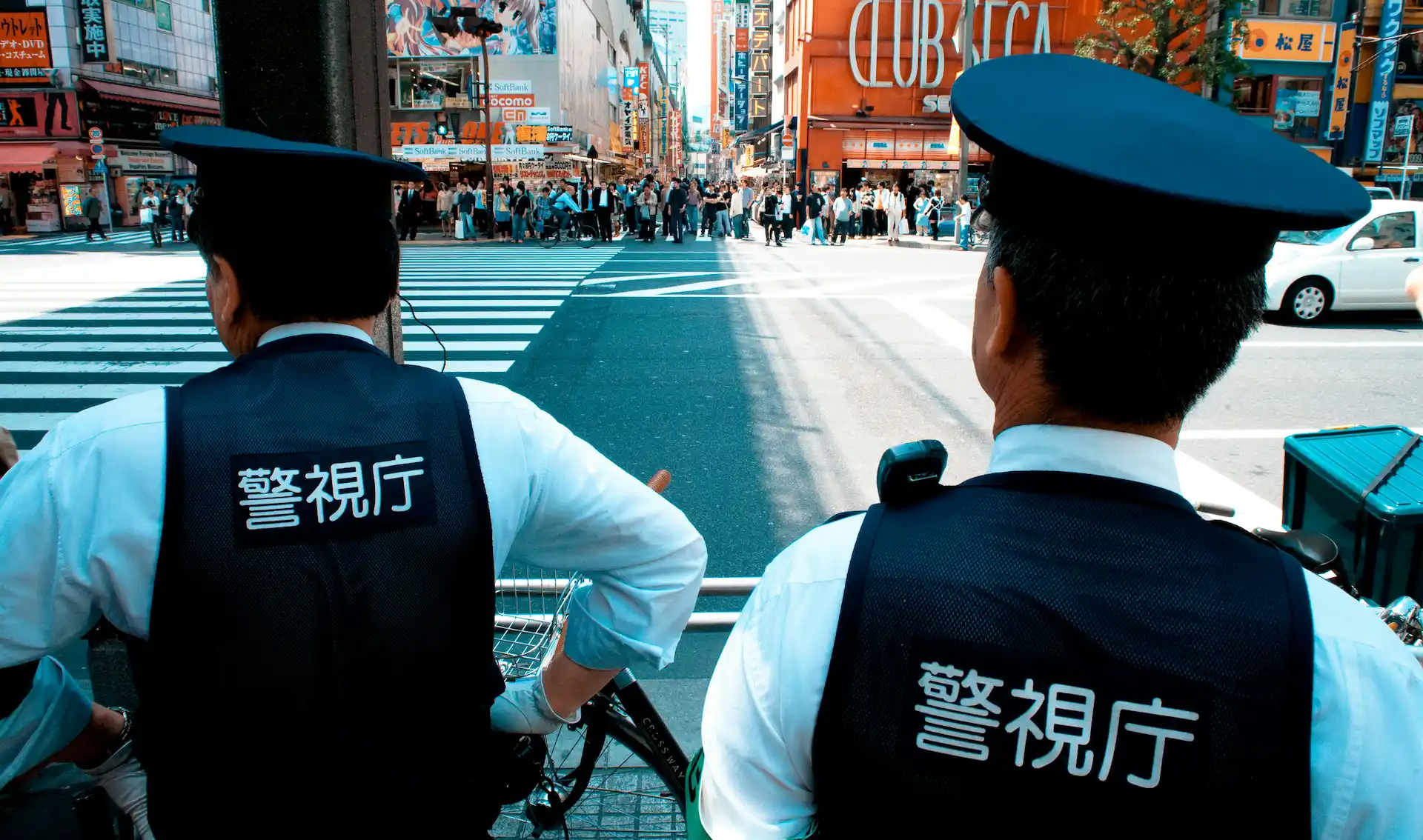
Part of what makes Japan feel safe is simply visible, low-key policing. Small neighborhood police boxes called koban are everywhere — there are roughly 6,000 to 6,300 of them nationwide, typically staffed around the clock by two to four officers working in shifts. You'll find them outside busy train stations, at major intersections, and scattered through residential neighborhoods.
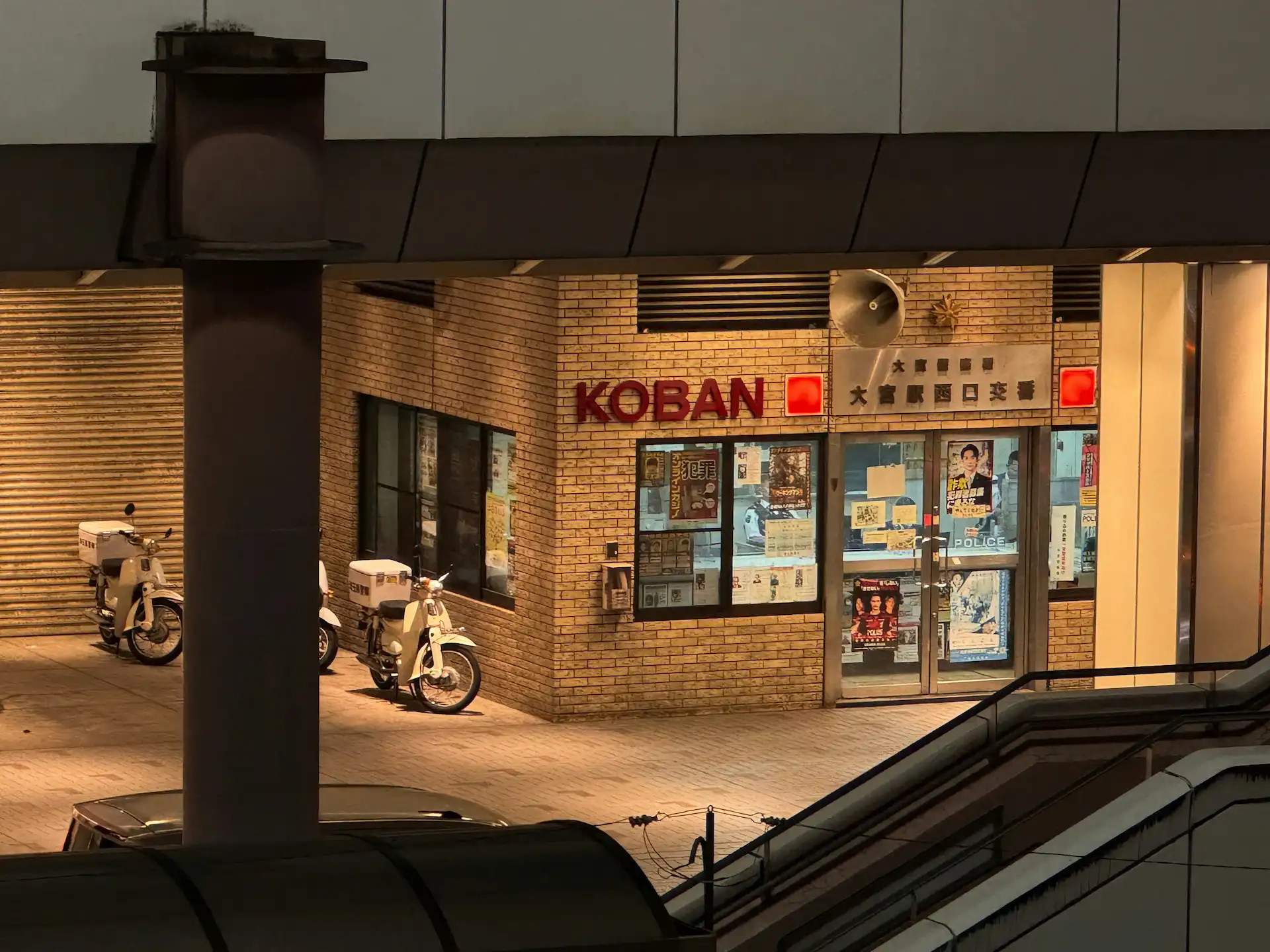
In practice, koban officers spend relatively little time dealing with serious crime. Their day-to-day work leans heavily toward things like logging lost property, giving directions to lost tourists and locals alike, and generally being a visible, approachable presence in the neighborhood. If you get turned around walking through Tokyo or Osaka, a koban is genuinely one of the easiest ways to get back on track — officers are used to fielding exactly that kind of question, and many now have interpreter support for non-Japanese speakers.
The system dates back to the 1870s and has been influential enough that several other countries — including Brazil, Singapore, and Indonesia — have adopted versions of it, sometimes even keeping the Japanese name.