What Is Ofuro?
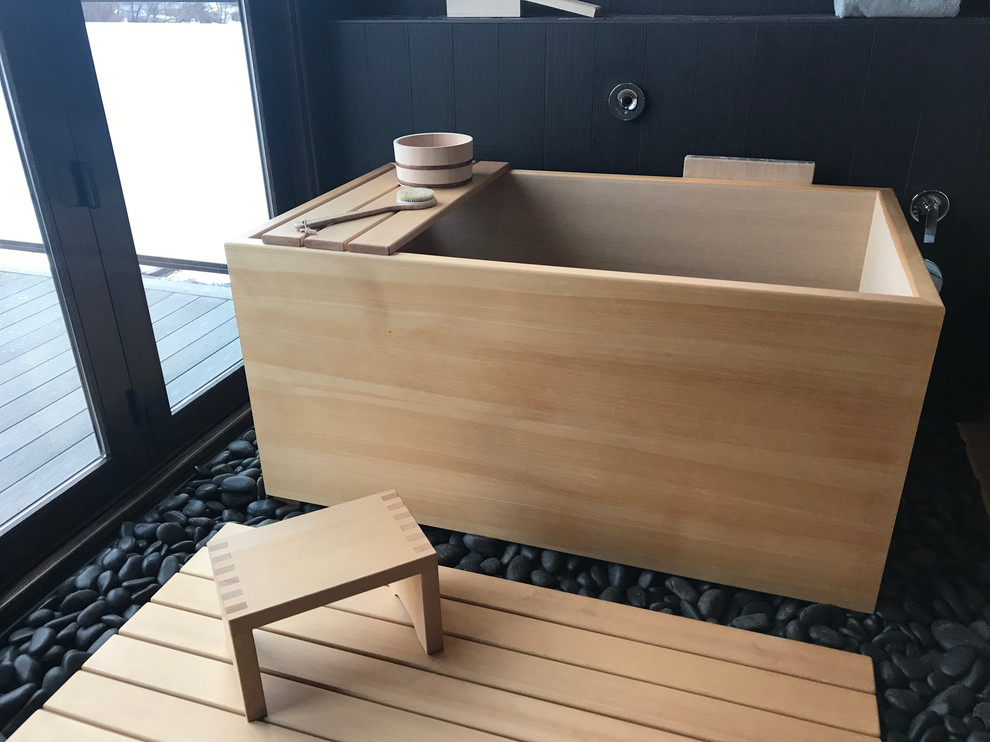
Ofuro is often translated simply as "bathtub," but the word covers more than that — it's shorthand for an entire daily ritual. Japanese bathtubs themselves are a different shape from Western ones: shorter, deeper, and built for sitting upright rather than lying down. The ofuro is usually housed in its own small, fully tiled or plastic-lined room, separate from the toilet. One section is for showering; once you're clean, you step into the tub itself, filled with very hot, clear water, purely to relax.
The Japanese take this seriously — most people soak for somewhere between 10 and 20 minutes a day, usually right before bed, since the heat is said to aid relaxation and circulation. In many households, young children bathe with their parents every day, and it's considered a genuine moment of family bonding rather than just a chore.
Where the habit comes from is a matter of some debate. One theory ties it to Japan's seasonal extremes — a hot soak sweats out summer humidity and warms you through in winter. Another points to geology: with volcanoes scattered across the country, heating water for communal bathing was, historically, simply easy to do.
"In many households, small children bathe with their parents every day, and it's considered an important moment of family communication."
The Sento: Japan's Public Bathhouses
Public baths, or sento, spread rapidly during the Edo period (1603–1868). By the early 1800s, Edo — with a population that had passed a million — had several hundred of them. Most people had nowhere to bathe at home, so they paid a small fee at the neighborhood sento and used it for both washing and soaking.
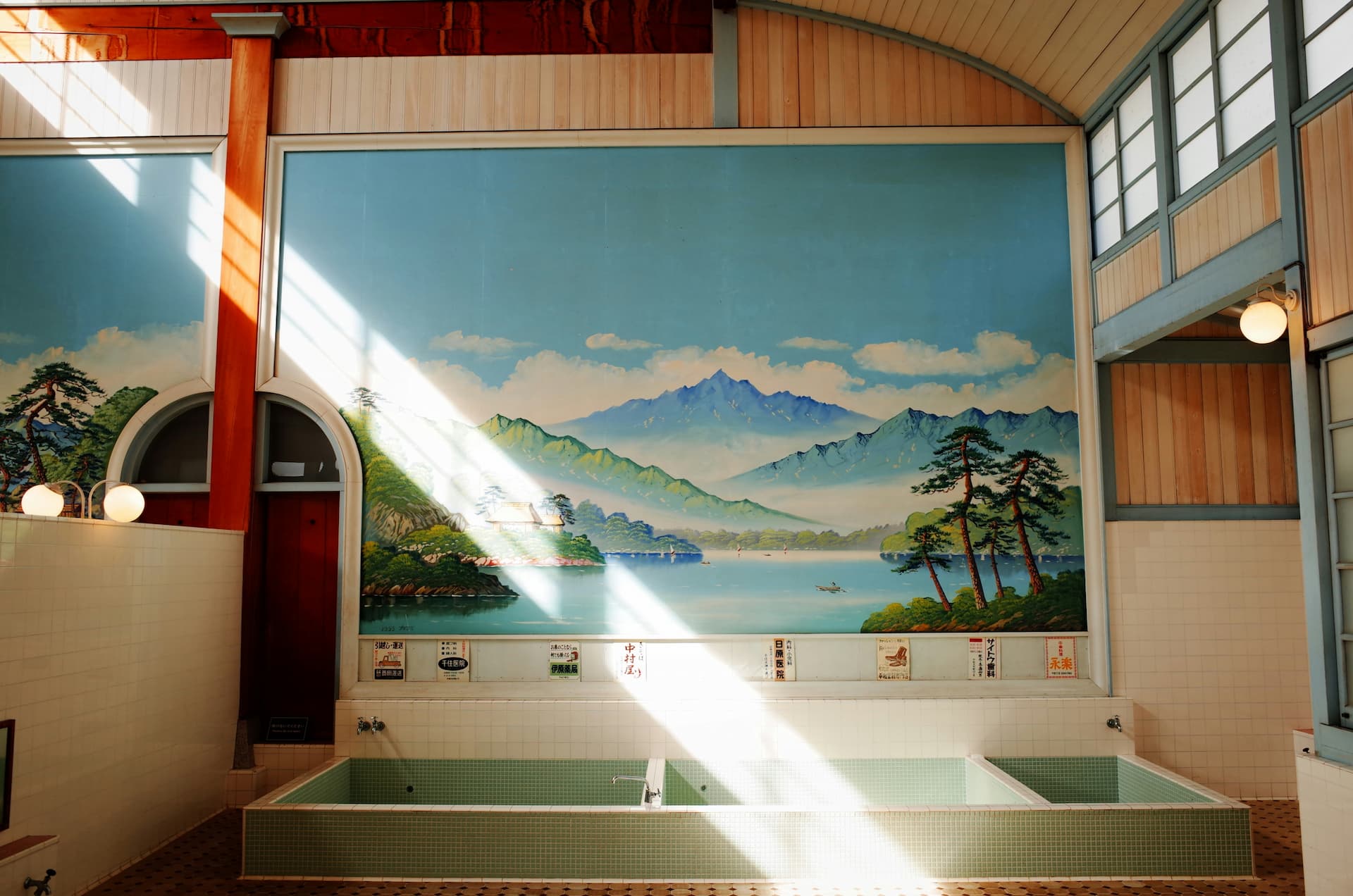
Sento are far less common today than they once were — Japan had well over 18,000 in the late 1960s, versus a few thousand nationwide now — simply because most homes have their own bath. Even so, plenty of people still choose to go, because a sento functions as much as a neighborhood social space as a place to wash.
Mixed-gender bathing was standard in the Edo period, and although it was formally banned as bathhouses modernized, the rule was inconsistently enforced for a long time. Today sento are almost entirely single-sex; genuinely mixed baths still exist here and there, but they're rare.
How a Sento Visit Works
Pay the entrance fee and get a key to your locker.
Head to the correct side for your sex, leave your shoes at the entrance, undress, and lock your clothes away.
Take a bucket and a stool to an open shower and wash sitting down.
Rinse off with a bucket of cool water just before getting into the tub — this is said to help prevent lightheadedness later.
Ease into the ofuro slowly; the water is genuinely hot, commonly in the 104–109°F (40–43°C) range, sometimes hotter. Let it cover you to the neck and relax — but don't overstay, since sitting too long in water that hot can make you dizzy on the way out.
When you get out, most people don't rinse off again, so the minerals in the water stay on the skin.
The etiquette is simple but non-negotiable: enter completely naked, don't splash your neighbors while showering, and only get into the communal tub once you're fully rinsed and free of soap.
The Onsen: Japan's Natural Hot Springs
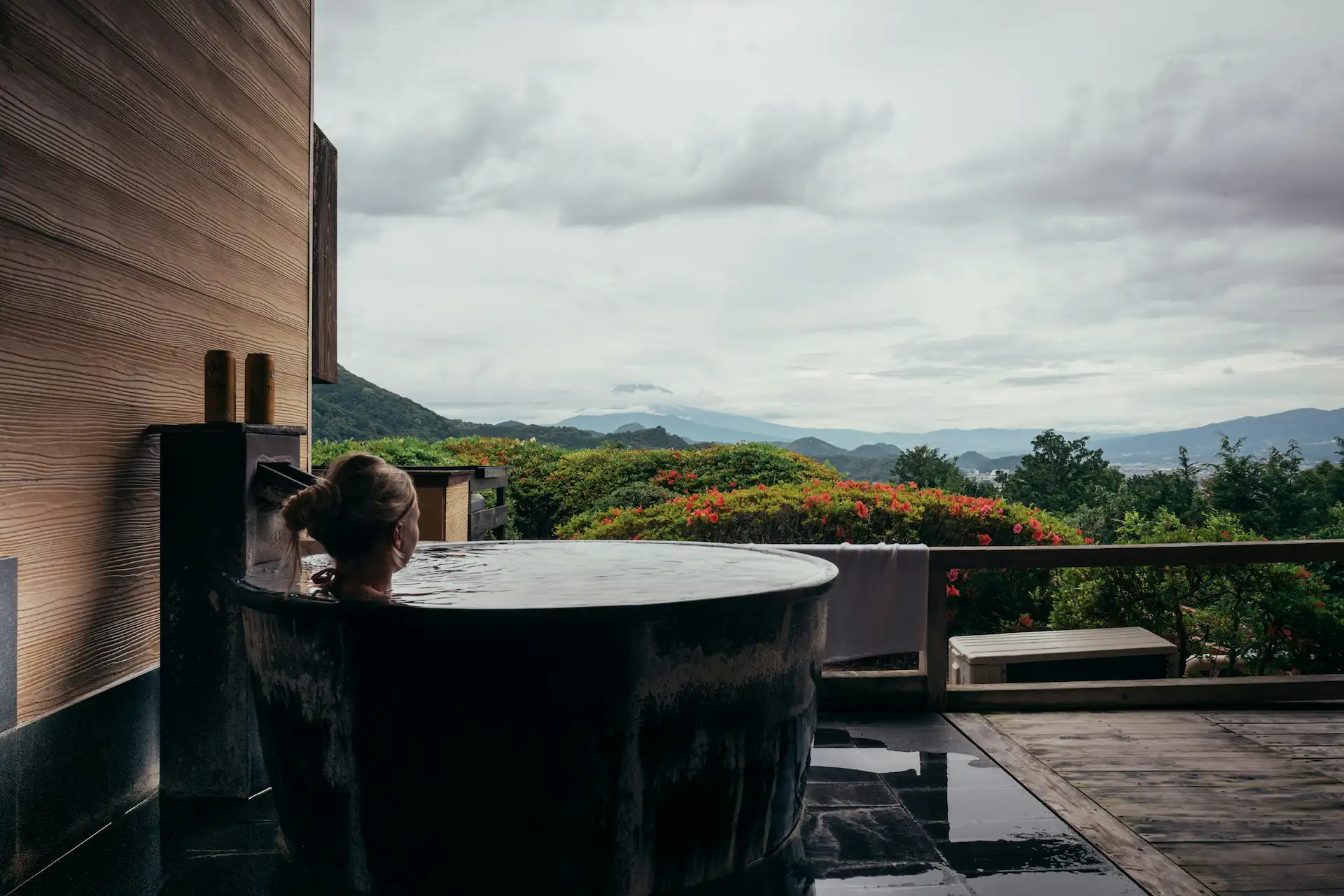
An onsen is essentially a more luxurious cousin of the sento, fed directly by natural hot spring water carrying minerals from the volcanic ground it rises through. Onsen are typically found in mountain resort towns, and the bath itself is often outdoors. The bathing etiquette is the same as at a sento.
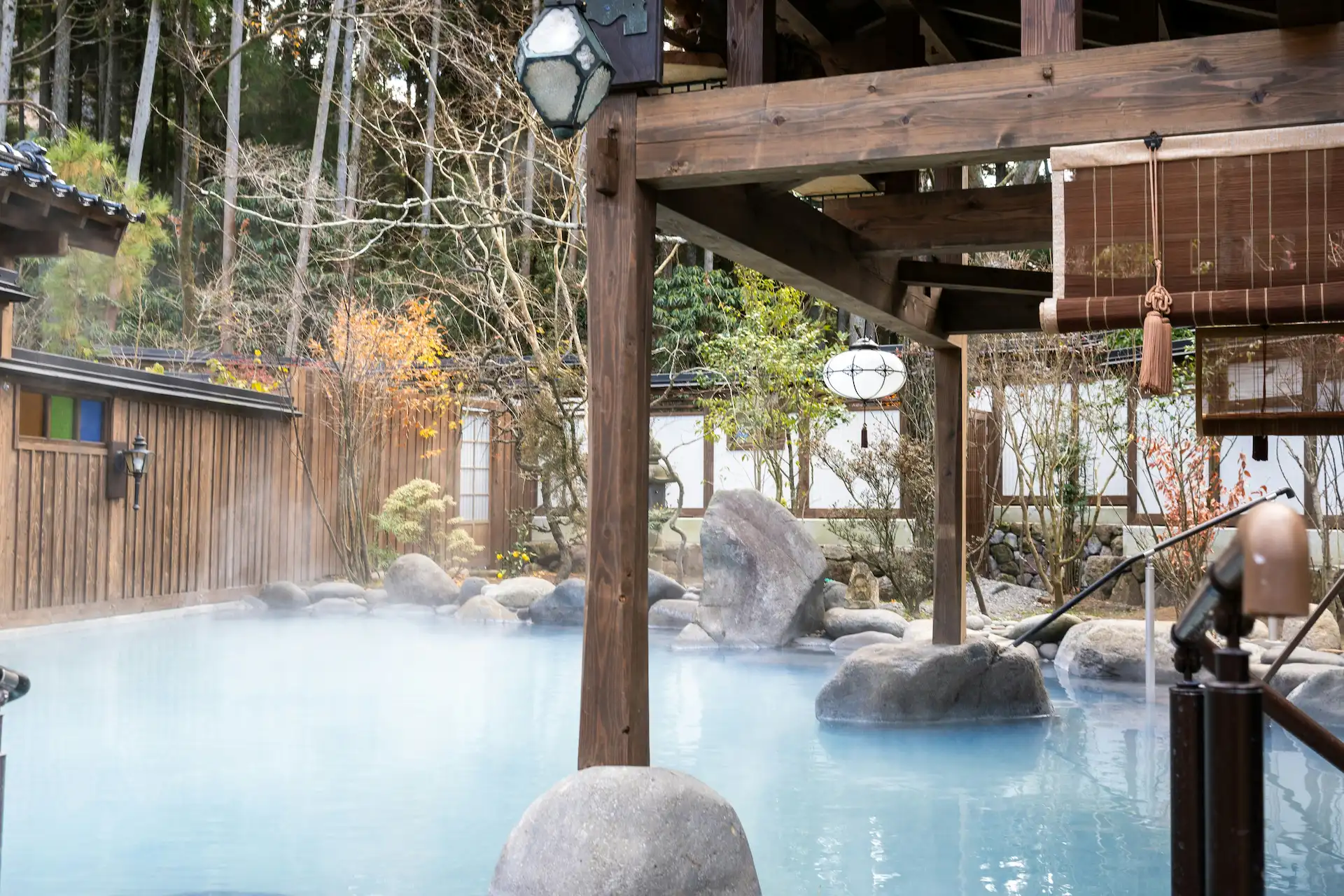
Beach holidays are a relatively minor tradition in Japan; a soak in a mountain onsen paired with excellent regional food is the classic getaway instead. A typical trip might be a few days at a hot-spring hotel, alternating between the bath and meals built around whatever the area is known for.