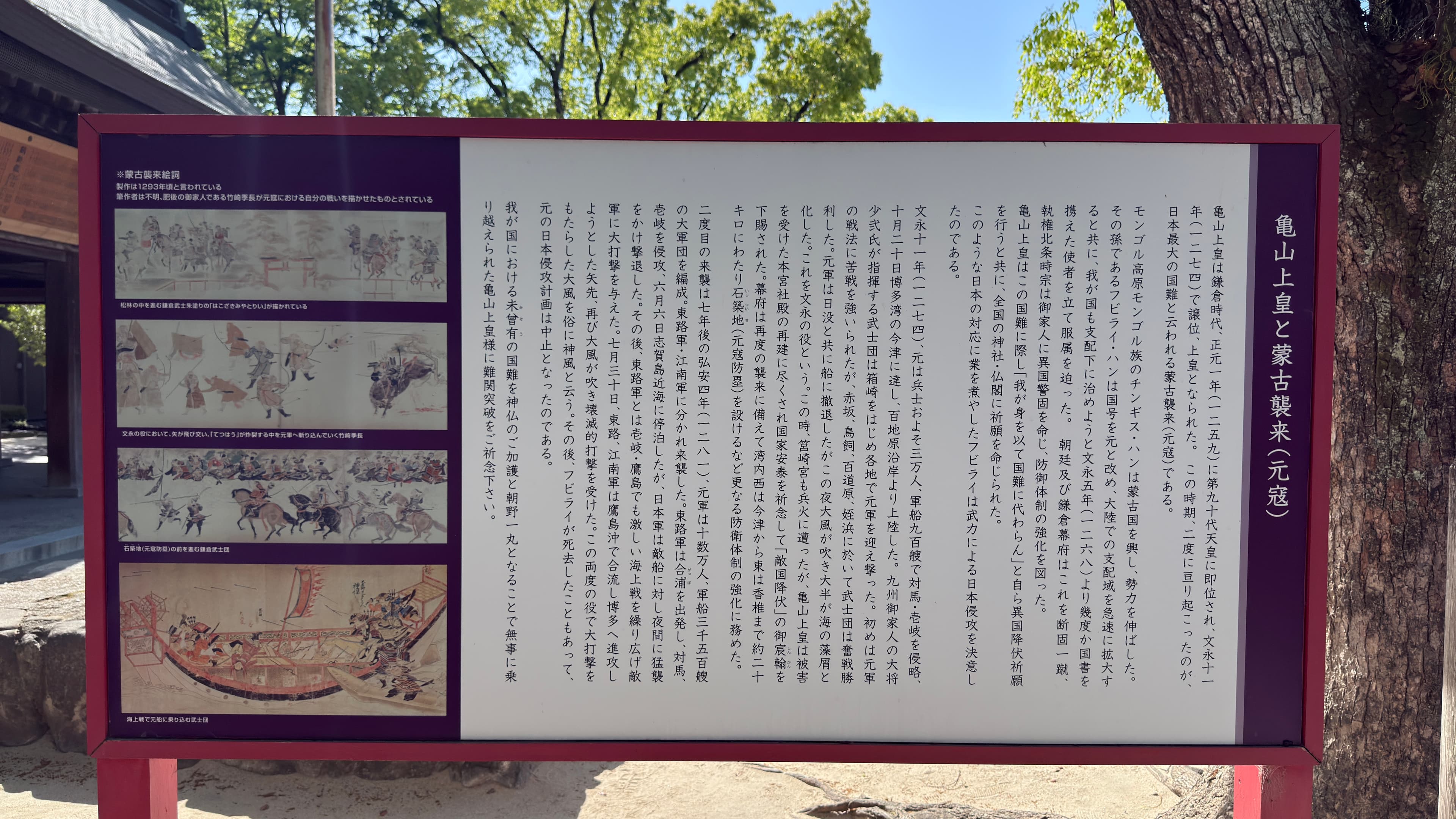
亀山上皇と蒙古襲来
Emperor Kameyama and the Mongol Invasions
Shrine · Hakozaki
Stop 1 of 1
Select language · 言語を選択
A sign commemorating how Emperor Kameyama prayed and bestowed the words "Defeat of Enemy Nations" upon Hakozaki Shrine to protect Japan from two Mongol invasions (Genko) during the Yuan Dynasty.
This sign recounts the Mongol Invasions (Genko) of the Kamakura period and the inspiring story of Emperor Kameyama, deeply connected to Hakozaki Shrine. Emperor Kameyama (r. 1259-1274) was Japan's 90th emperor who, even after abdicating, faced the national crisis of Mongol invasion with unwavering resolve. He personally performed prayers saying 'I shall bear this national hardship,' commanding all temples and shrines across Japan to do the same.
Kubilai Khan of the Mongol Empire repeatedly demanded Japan's submission from 1268 onward, but both the imperial court and military government refused. The first invasion (1274) saw approximately 30,000 troops and 900 ships land at Hakata Bay, resulting in fierce battles with Kyushu warriors. When Mongol forces retreated at sunset, a violent storm that night destroyed most of their fleet. The second invasion (1281) brought over 100,000 soldiers, but despite intense fighting, a devastating typhoon again annihilated the Mongol fleet. These two divine storms became known as 'Kamikaze' (divine wind).
Emperor Kameyama, devoted to rebuilding Hakozaki Shrine damaged in the first invasion, received the phrase 'Teki Koku Koufuku' (Enemy Nation Subjugation) as an expression of his prayers for national peace. This represented not military conquest, but rather 'Japan's virtue and divine power repelling foreign threats'—a spiritual invocation. This plaque remains displayed at Hakozaki Shrine today.
jpexplained.com